Thursday, April 11, 2019

Truce: The Day the Soldiers Stopped Fighting- Nonfiction

Truce: The Day the Soldiers Stopped Fighting

Title: Truce: The Day the Soldiers Stopped Fighting
Author: Jim Murphy

Copyright: 2009
Genre: Nonfiction
Appropriate for ages: 11-15 years old
Theme: Peace

Background:
Truce is set in 1914 during World War I.

Summary:
The story Truce: The Day the Soldiers Stopped Fighting is during the intense battle between the Allied and Central Powers. This war was very difficult for both sides. The soldiers fought in trenches, or ditches, where they were constantly covered in filth. Hardships, heartache, and fear constantly ran through their minds. If they were not being attacked by ammunition, it was by rats, insects, lice, and other creatures. On Christmas Day, both Powers decide to take a truce and stop war. The soldiers put all combat aside, so that they could enjoy a day of fellowship.

Quote from the book:
"But for one night and one day, some units in the warring parties-- the armies of France and Britain on one side, and Germany on the other-- put down their weapons for the briefest of moments to celebrate a holiday that brought opposing sides together."
-Jim Murphy

Illustrations:
This book had images of the war that were very touching. They were either in black and white or sepia, which indicates that are quite dated. Maps were also listed in the book in order to help the reader visualize the geographical standpoint of this great war. It is important that the author used these images because it helps put the even into perspective. Seeing the faces of the soldiers helps you remember that this is not just a made up story, but it is reality.

My Thoughts:
I think this is a very important book for late elementary early middle school students to read. It helps you to visualize the hardships and agony the soldiers endured and makes you realize how lucky we are to live in a free country. It also drives home the importance of accepting people for who they are, even if they believe differently than you.

Awards:
A 2010 Notable Book for a Global Society
A BCCB Blue Ribbon Book

Links:
Class Activity
Class Activity (History, Art & Music)
Author's Website
Jim Murphy

Bridge to Terabithia- Contemporary Realistic

Bridge to Terabithia

Title: Bridge to Terabithia
By: Katherine Paterson

Copyright: 1977
Genre: Contemporary Realistic
Appropriate for age: 9-12 years old
Theme: Friendship

Summary:
Jess Aarons is an eleven year old boy who loves to run so much, that he is the fastest kid in eight grade. His other hobbies include painting and drawing, which causes his friends to refer to him as "sissy." He spends most of his time trying to win his father's attention. Jess comes from a rural home and is less fortunate than others. He is having to pick up slack in the home and take care of his younger sister, so he has no time to explore the outdoors or himself. Leslie Burke is the new girl in town and Jess's new neighbor. They become inseparable after she beats all the eight grade boys in a running competition. Leslie helps Jess find himself, by creating a fantasy land in their backyards. Here, they are able to let their imaginations run wild. One day, Jess's music teacher asks if he wants to go visit the art gallery. He felt bad for leaving Leslie alone, since they visited the magical land of Terabithia everyday after school. While on his trip, he hears heartbreaking news. Leslie had fallen off the rope that swings over the creek. The news is not good. Jess blames himself for not meeting Leslie that day. He shuts Terabithia out because it reminds him of his best friend. Later, he realizes that Leslie would want him to keep Terabithia alive. He replaces the rope with a bridge, that way no one will ever get hurt. Bridge to Terabithia is a place to celebrate life, love, and to let your imagination take over.

Quote from the book:
"Just close your eyes and keep your mind wide open."
-Lessie Burke

Illustration:
There are no illustrations in this story; however, Paterson goes into great detail while describing the land of Terabithia, making it feel like you are there.

My Thoughts:
Bridge to Terabithia is absolutely amazing. In this book, you walk along the side of Jess Adams, and  he tells you about the troubles he is facing. It makes you sad, mad, and happy. In some parts, I wanted to reach into the book and help him because I knew he was being mistreated. But, after he meets Leslie, his world turns around. Tears filled my eyes after I read about Leslie's death. Jess had lost his best friend and the best thing in his life. I was so happy that he decided to go back to Terabithia. This reminds me of real life. Even though a special person in your life may be gone, you can still remember them by keeping their memory alive, and that is exactly what Jess did.

Awards:
John Newbery Medal

Links:
Class Activity
Author's Website

The Huger Games-Science Fiction


Title: The Hunger Games
Author: Suzanne Collins

Copyright: 2008
Genre: Science Fiction
Appropriate for ages: 10-15 years old
Theme: Survival of the fittest, Love conquers all


Summary:
The Hunger Games takes place in a futuristic time, in a place known as Panem. The country is divided into twelve districts, which used to be known as North America. President Snow has started an annual event called The Hunger Games, due to a revolution in the past. Each year, each district must select two tributes, one male and one female, ranging from twelve to eighteen years old to fight. Katniss Everdeen volunteers for District Twelve's female tribute, after Primrose Everdeen, her litter sister, is  selected on the day of the reaping. Katniss Everdeem and  the baker's son, Peta Mellark, will represent District Twelve, and will train to fight against twenty-two other tributes, until only one is left standing. Katniss and Peta pretend to show interest in one another in order to gain sponsors during the games. Throughout the games, their love begins to become more than just an act. They must come together and come up with a way for them both to win. After deciding they both would eat poisonous berries (nightlock), the capital calls off the games and declares them both victors. What they did not know, is that they are now about to enter the biggest uprising Panem has ever seen.

Quote from the book:
"And while I was talking, the idea of actually losing Peta hit me again and I realized how much I didn't want him to die. And it's not about the sponsors. And it's not about what will happen when we get home. And it's not just that I don't want to be alone. It's him. I do not want to lose the boy with the bread."
-Katniss Everdeen

Illustration: 
There are no illustrations in this series. The colors on the covers are vibrant, solid, and always contain a graphic that correlates with the novel. 

My Thoughts:
I first read this series in my eight grade English class. I immediately fell in love with the idea of Katniss and Peta, but I did not think they were being treated fairly. The capital of Panem was very controlling, almost like dictatorship. Having citizens of a country fight against one another does not show patriotism. Instead, it is rebelling districts against each other rather uniting them.This book brought smiles and tears of sadness. The end lead me to wanting more, and I am so glad Suzanne Collins created a series. I have read it more than once, and I recommend this series to all.

Awards:
Dorothy Canfield Fisher Children's Book Award
Cybils Award for Fantasy and Science Fiction- Young Adult
California Young Reader Medal: Young Audult

Links:
Class Activity
Author's Website 

A Series of Unfortunate Events: A Bad Beginning- Modern Fantasy


Title: A Series of Unfortunate Events: A Bad Beginning
Author: Lemony Snicket 

Copyright: 1999
Genre: Modern Fantasy
Appropriate for ages: 9-12 years old
Theme: When faced unfortunate events, never forget the importance of family.

Background:
The children in this series are orphans. Webster's Dictionary defines an orphan as a child deprived by death of one or usually both parents. The Baudelair children lose their parents as well as their home, so they are required to live with a distant family member.

Summary:
Violet, Klaus, and Sunny Baudelaire lose their mom and dad due to a house fire. On account of this event, they are taken into custody by their distant relative, Count Olaf. The Baudelair's parents were quite wealthy, although Violent cannot receive her inheritance until the age of eighteen. Therefore, Count Olaf comes up with different schemes in order to steal the children's fortunes. The children are faced with many unfortunate events as they try to escape bondage of evil Count Olaf.

Quote from the Book:
"They didn't understand it, but like so many unfortunate events in life, just because you don't understand, doesn't mean it isn't so."
-Lemony Snicket

Illustration:
There are no illustrations throughout the series. although the front covers give off dark, mysterious feelings. The cover provokes adventure and wonder, luring readers into wanting to know what happens.

My Thoughts:
I read this series while in middle school, and I felt such sorrow and sympathy for the Bauldelair children. They have just experienced the most tragic event that could ever happen to children, yet they are placed with a person who does not care about them. Although I understand that bad things in life are unpredictable and do happen, I wish that Count Olaf would have cut them some slack. It seemed as though they could never catch a break, and that was the major thing that broke my heart.

Awards:
Colorado Children's Book Award
Nevada Young Readers Award

Links:
Class Activity
Class Activity (Cross Word)
Author's Website
Lemony Snicket

The Gigantic Turnip- Traditional Literature

Image result for the gigantic turnip by aleksei tolstoy class activity

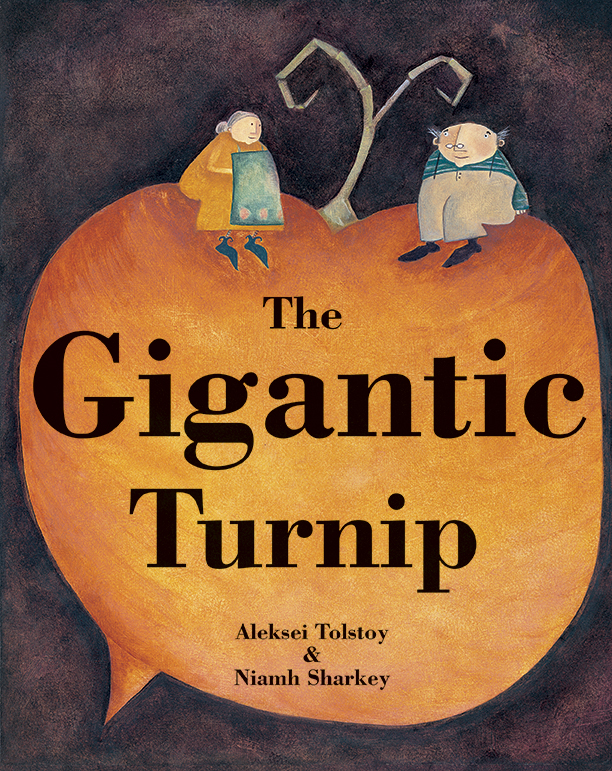
Title: "The Gigantic Turnip"
Author/Illustrator: Aleksei Tolstoy & Niamh Sharkey

Copyright: 2005
Genre: Traditional Literature
Appropriate for ages: 4-7 years old
Theme: Size does not determine strength

Summary: 
An old man and an old woman lived together in a cottage near a grown up garden. After planting some vegetables, they noticed a gigantic turnip and needed some help retrieving it. They asked several friends to help out, until finally, pop, out comes the turnip!

Quote from book:
"That night, the old man and the old woman made a huge bowl of turnip stew. Everyone ate as much as they could. And do you know what? The hungry little mouse ate the most of all."
-Aleksei Tolstoy

Illustrations:
The illustrations in this book are made up of very soft and warm colors. This book also has many counting opportunities for children.

My Thoughts:
Growing up, I have heard many versions of "The Gigantic Turnip"; however, this has by far been my favorite. I love how the little mouse was the missing piece to solving the turnip problem. The old man and old woman were very thankful they had friends to help them retrieve their gigantic turnip, so they were kind enough to cook them stew. I love how this book illustrates friendship and how working together to get a job done is sometimes necessary.

Awards:
Mother Goose Award Winner

Links:
Class Activity
Class Activity (Vocabulary/Synonyms)
Author's Website
Aleksei Tolstoy